Tuesday, April 25, 2017

My core beliefs as Hindu and moving toward a new norm in religious understanding


The following write up was submitted as assignment in coursera course Soul Beliefs: Causes and Consequences - Unit 2: Belief Systems”

A statement of the core belief and When and under what conditions do you think, it was formed

I considered many possible core beliefs but zeroed on this one as it will be appropriate contextually.

“I AM HINDU BRAHMIN BOY/MALE”

I was born in a Hindu Brahmin family of Vaishnava sect. Some of the important expectations are belief in god, rituals, respect for parents and teachers, being honest, respect for elders and women, honesty, modesty and vegetarian food habits. Bhakti, ie devotion to God and prayer (in the form chanting and asking for stuff, except for good marks in exams) is the way and goal. Karma and astrology were part of life, and work needed to be treated as Karma yoga or one’s duty to society and to fulfill one’s family needs. Temple visits and following of rituals and excellence in education and patriotism were a must. Involvement in sports and entertainment were encouraged more as spectator rather than participant (Except for cricket). Reading English fiction and Tamil journals were also encouraged. By the way the medium of instruction during most of schooling and college was English.

In my case mother who was spiritually inclined passed away at an early age of five and my step mother was a very orthodox religious lady, and this conflict in values used to influence me in major part of adult life. The Extended family was very important and grandparents doted on us. The Holidays were spent in an uncle or Aunt’s home at a different down in nearby towns. Holidays in far off cities were a luxury item. Sex was Taboo and boys and girls were kept separate. Parents never discussed sex with the children and youth learned of sex in pop literature and movies. Under these circumstances the schooling was completed. Interactions were mostly with other Brahman boys except a few exceptions in High school.

How it has influenced your thoughts, feelings, and behaviors in the past

I do not if it was the genes or the environment but I grew to be shy type of a person. My entry into college exposed me folks from other parts of India and diverse backgrounds (different languages, attitudes and family backgrounds). Early upbringing kept me focused on studies in college (although participation in sports increased) stay out trouble like various potential addictions and habits. Although there was lot of politics among groups, I tended believe all were nice guys and got along well with most people I interacted with. My health and confidence in my abilities improved during college, where again education and getting good marks were the focus with idea of doing well and getting an excellent job. I must say due to focus on education and reasonably superior performance and clean habits we developed an air quite superiority (even though we were lacking most other skills). The downside of this attitude is not recognizing the ability in others and not being in touch with reality of many situations and perhaps lack of gratitude we owe to many folks.

Like most students from premier Institutes in India at that time, I aspired for higher education in USA as route to better prospects in life and proceeded for Master’s degree in USA. My Aunts and grand mom advised me to stay away from the three Ws (Which were Wine, Women and I forgot what the third W was; was it wealth?, I do not think so, was it White?, probably not, must have been  something to do with remaining vegetarian).

I continued do well in studies in USA (even better as choices were more and open book exams). But socially I was dumb trusting wrong folks, not being centered enough in my culture, believing that any girl that smiles at you (which is often in the USA) is in love with you, etc. But the value system developed early on ensured we hung out with similar folks and this prevented us from integrating better in the adopted environment. Anyway, I completed my studies, worked for some time, made some good friends, had some  enjoyable times and some terrible times,  returned to India due to family considerations.

How it currently influences your thoughts, feelings, and behaviors

Many of the beliefs that were taught earlier on makes more sense now. Only I wish they (parents and teachers) had done a better job of it. Somehow taught us the basics and philosophical background in a better way. I would have been much better grounded and confident as an individual that way. I believe I would have been less distracted and more productive due that action. I feel a bit let down earlier on in life this way. I am now grateful for many opportunities that are available these days via TV, Internet and course like this to really understand our religion, culture and heritage.

Finally, after you have thought about one of your core self-beliefs, consider (in writing) if it “makes sense” to keep it or if the time has come revise it or let it go.

I think core belief may be revised from I am Hindu Brahmin boy to I am a realized and well-grounded Hindu or Sathana Dahrma Practioner. I am well grounded in the Basic Tenets of this Dharma and am aware Basic differences between the other Dharmic Traditions like (Buddhism, Jainism, Sikhism) and other Major Abrahamic Religions of the world (Judaism, Christianity, and Islam). I respect other religions that respect Hinduism and am willing to educate those who do not. And Unlike in the past we will stand up for the rights that have been denied to us and have been  responsible and taken/taking corrective actions where we may have erred. Time for deeper faith and understanding, being well rooted, clarity and regular practice rather than shallow beliefs and superstitions  based  on fear or greed. Om Shanthi.

Monday, April 3, 2017

Natural Selection

natural-selection-2-638.jpg
This document was was submitted by  me as assignment for the coursera course Soul Beliefs and consequences

Assignment criteria #1; "In your own words, describe Darwin's theory of "Descent by Modification".";
Darwin’s theory of Descent by modification was based important observations on nature of species:
  1. Members of a population of the same species vary in their traits.
  2. Traits can be inherited, or passed from parents to offspring.
  3. Populations can produce more offspring than the environment can support.
  4. Due to a lack of food or other resources, many of the offspring do not survive.
In his theory of Descent by modification Darwin postulated that individuals with a trait more suited to the environment are better able to survive and reproduce. These individuals are the ones that pass on these traits more frequently to the next generation. Subsequently, their traits become more common in their descendants and in the population. So, over time, organisms better suited to the changing environment will thrive. Organisms not ideally suited would become extinct. Given enough time a species may change enough traits to eventually become a totally distinct species. They led him to the conclusion that all species derived from a common ancestor through the process of descent with modification which was later termed natural selection. In natural selection, fitness refers to the ability to survive and reproduce.
Natural selection leads to adaptive evolution. Adaptation is a trait that organism has that increases its chance of surviving and reproducing in a specific environment. The off springs of this organism with adaptation trait will inherit this trait and will be more suited to survive and reproduce in the environment and hence causing the population to have this favorable trait.

Assignment criteria #2; "Explain how "Natural Selection" contradicted the prevailing world-views of Darwin's time; and
Darwin's observations were to contradict the Biblical  'Genesis' version of the creation of life. Since many of his scientific peers believed that God created all animal and plant life, and these species remained unchanged since their creation, he repeatedly delayed publishing his ideas.  It dealt a massive upset to the biblical account of creation as well as against the assumption of the unique status of Man.  
However, there was a general acceptance of Darwin's ideas amongst the younger generations of scientists. And as they began to embrace his ideas and accumulation of fossil records intensified, the public became more prepared for the acceptance of earlier human species and of a world much older than 6000 years (which was the age of earth according biblical story of creation). It is also to be noted here that There were other evolutionary theorists at that time but their theories were consistent with the idea of Christian God’s work in progress; but Darwin’s theory was based on philosophical materialism of random variation and natural selection and contrasted with the biblical version of creationism.

Assignment criteria #3, I would like to take out the time of "150 years", how about we change it to "Providing evidence that resistance to the theory of evolution remains strong in some sectors of our society today, after Darwin's his seminal work was published."
There is no question that evolution has shaped us and the world we live in today, and it has major consequences for our daily lives. And yet 150 years after publication of The Origin, Darwin’s theory remains “controversial” in America and Christian societies.  This is no longer a scientific controversy. Predictions generated by the theory of evolution have been repeatedly tested against scientific facts, and the theory has held fast. The clear majority of scientists accept the theory of evolution based upon multiple lines of overwhelming scientific evidence, just as they accept the Copernican theory that the earth revolves around the sun.
Americans face the social controversy of  about how to reconcile the teaching of scientific fact with religious belief. And a recent Gallup poll on Darwin’s birthday showed that only 39 percent of the American public overall “believes” in the theory of evolution and would rather believe in creationism or Intelligent Design. Whereas  97% scientists believe some theory of evolution and 87% of them believe in the Darwin’s theory of Natural selection.
Some people see bleak implications for human society in the theory of evolution. If Darwin is right, does it mean that we are all engaged in a perpetual struggle for existence, in which only the fittest will prosper? Is selfish behavior always rewarded at the expense of the common good? This might be an overly simplistic view, especially when we take culture and learning into account. Modern evolutionary theory is beginning to show how natural selection can operate at multiple levels, and may favor groups with elevated levels of cooperation and altruism. This can be considered as survival of the fittest group rather than the fittest individual, as individuals require society for their survival and vice versa.
Another important concept from modern evolutionary theory: the idea of niche construction. In ecological jargon, an organism’s niche is the combination of environmental factors that define where it can live, grow, and reproduce. Human culture is a remarkable example of niche construction. Through tool-making, language, and the construction of society, humans have expanded the range of environments in which our species can live and grow. Without culture, natural selection would act on us very differently that it does today. But this very culture and tools not used optimally is threatening the world in terms detrimental climate changes and threat of Terminal nuclear war. One hopes that natural selection will throw up solution to the problem so that all humans and most species survive (as extinction of one specie means the probability of all species surviving goes down in the common ecosystem).
Buddhist Societies do not seem to have any objections to theory of evolution as they believe cosmos and time without beginning and end that is ever changing and is consistent with natural selection. Hindu societies who believe souls in all living entities and that souls may have millions of births before being perfected as human beings. With time scale of creation stretching to trillions of years and sole source, also do not have any serious problems with accepting natural selection not being different from God’s way.
I would like complete this write up with Top 10 scientific problems with Biological and chemical Evolution and the bonus problem of Human behavior (Read more about in reference -4). This list does not negate the scientific community’s acceptance of Darwin’s theory bur opens more areas for research to fill the gaps.
References:

The Holocaust of Islamic conquests in India

This document was was submitted by  me as assignment for the coursera course Soul Beliefs and consequences
The Holocaust of Islamic conquests in India

eid-bahadur-hah-1843.jpg
March21, 2017
Ayodhya Ram Mandir Issue: Supreme Court Suggests Out-Of-Court Settlement -

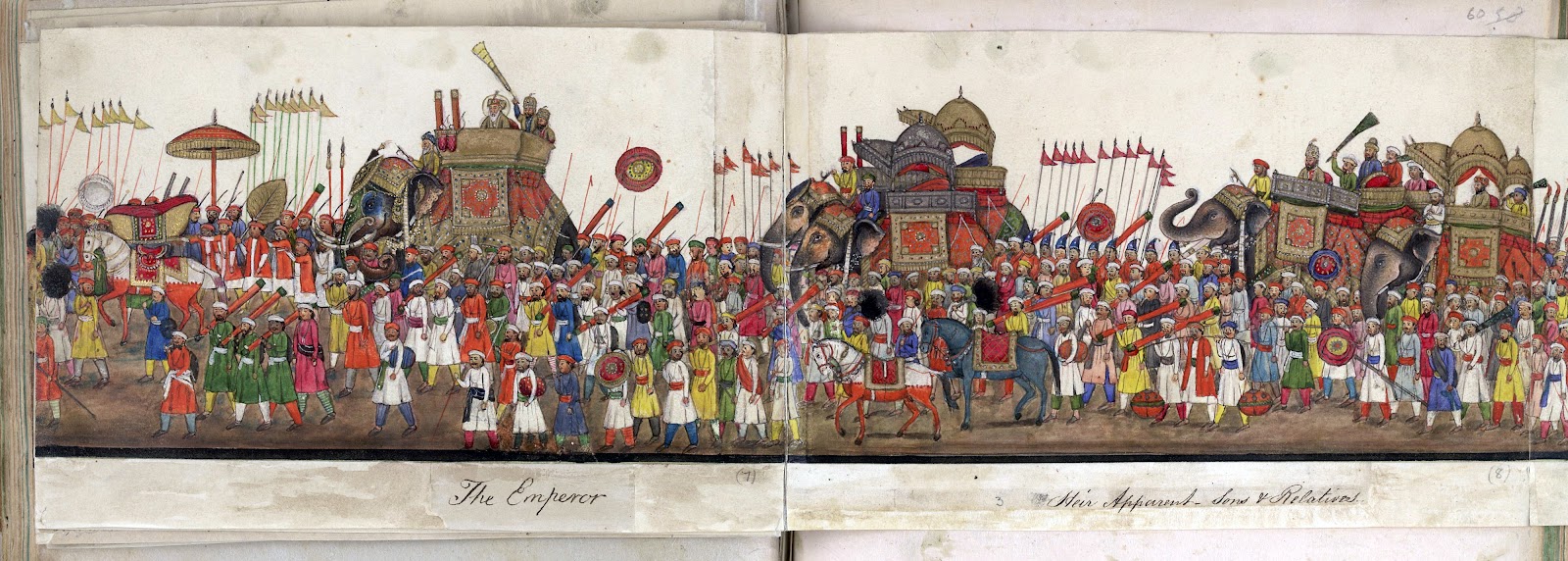
The Moghul Empire established in India by Invading Islamic forces between 1000 AD to 1800 AD has reportedly destroyed 1856 temple complexes in India and built Mosques on that site. One such Complex is the Ram Janmabhoomi Complex in the City of Ayodhya in the State of Uttar Pradesh. Ayodhya is the birthplace of Avatar of Lord Vishnu as Rama. The unused Mosque that was built by Emperor Babar in the 15th century after destroying the temple of Lord Ram there, was pulled down by Hindu volunteers in the year 1991. A Case has been filed in the Supreme court of India by the opposing parties on their right to build their place of worship. Supreme court has suggested an out of Court settlement.


Background on Islamic Invasion of India

The world-famous historian, Will Durant has written in his Story of Civilization that "the Mohammedan conquest of India was probably the bloodiest story in history".

India before the advent of Islamic imperialism was not exactly a zone of peace. There were plenty of wars fought by Hindu princes. The non-combatants were never killed or captured. A human habitation was never attacked unless it was a fort. The civil population was never plundered. War booty was an unknown item in the calculations of conquerors. The martial classes who clashed, mostly in open spaces, had a code of honor. Sacrifice of honor for victory or material gain was deemed as worse than death.
Islamic imperialism came with a different code--the Sunnah of the Prophet. It required its warriors to fall upon the helpless civil population after a decisive victory had been won on the battlefield. It required them to sack and burn down villages and towns after the defenders had died fighting or had fled. The cows, the Hindu Priests, and the Bhikkhus invited their special attention in mass murders of non-combatants. The temples and monasteries were their special targets in an orgy of pillage and arson. Those whom they did not kill, they captured and sold as slaves. The magnitude of the booty looted even from the bodies of the dead, was a measure of the success of a military mission. And they did all this as mujahids (holy warriors) and ghazls (kafir-killers) in the service of Allah and his Last Prophet.
Hindus found it very hard to understand the psychology of this new invader. For the first time in their history, Hindus were witnessing a scene which was described by Kanhadade Prabandha (1456 AD) in the following words:
"The conquering army burnt villages, devastated the land, plundered people's wealth, took Priests and children and women of all classes captive, flogged with thongs of raw hide, carried a moving prison with it, and converted the prisoners into obsequious Turks."
For the Hindus, Islamic jihadi invasion was like an Alien invasion or an Artificial Intelligence turning on its creators to eliminate them as imperfections.
List of Temples Destroyed in India by Islamic forces.
From the above we see that Islamic invasions and empire building of India that started around 1000 AD and lasted for about 800 years was not only conquest of land and wealth but an attempt to convert to enslave people belonging to Hindu religion. Since Muslims did not believe in idol worship, they destroyed temples and idols of Hindu gods, looted the gold and precious stones,  and built mosques on the temple land.
Somnath_temple_ruins_(1869).jpgdownload.jpg
The link below lists about 1856 temples in India that have been been destroyed and Mosques built on the temple land, oftentimes using the debris of the temple destroyed.
The link below lists the major Hindu Temples that have been destroyed and mosques built on that land
Hindus in India were persecuted by Muslim rulers in several ways. Murder, rape and pillage during war, conversion to Islam (forced conversion using the sword), Slavery of Muslims, destruction of temples and places of worship and conversion of them into Mosques, Additional tax on Non-Muslims, Cow slaughter (which is not allowed in Hinduism) and Minority Islamic rule over the majority Hindu population.
Rebuilding of Ram Temple for Hindus is bringing back some much-delayed justice for the atrocities pretreated by Islamic rulers and reclaiming their land from the hands of Muslims and pseudo secularists (those who would recognize even basic rights of the majority and support the atrocious rights of minority) and communists who collaborated after the independence to retain power. But the Islamic hardliners are pig headed, relentless and unreasonable in not granting reasonable wishes of Hindus who want to rebuild their temple for beloved Ram in one of the holiest of places, Ayodhya (and not in Mecca).

This situation can be warning to the rest of the world that is just waking up to Islamic terrorism, as to what might happen to their folks, beliefs, human rights and religions and places of worship should Islamic forces dominate the world politics. (or should any one religion dominate the world politics either by fear or greed).

Thursday, March 9, 2017

Could Societies have existed without religion? And Soul Beliefs in Hinuduism


This document was was submitted by  me as assignment for the coursera course Soul Beliefs and consequences. I Have also included here a posting I did in the course titled “Soul Beliefs in Hinduism”.
Could Societies have existed without religion?
"Kovil illadha uril kudiirukathey"(கோவில் இல்லாத ஊரில் வாசிக்கதே)the Tamil saying loosely translated to mean “Do not reside in town or village that does not have a temple.” I tend to agree with this sentient and feel other humans must have felt the same and it is more than likely that no society existed without religion.
The question is whether humans invented moral codes and religion to ensure social order, prevent freeloaders and create fighters for warring groups or if like finding fire the humans stumbled upon god realization while entering trance state while dancing or during contemplation and  deep meditation – rituals and moral code derived later from this realization or handed down by a prophet/saint.
The evolutionary psychologists like Wade believe that the primitive societies moved away from Alpha male dominated society to egalitarian society (where no one individual was the leader); the dominant person was at risk as others tended to gang up against them. Sharing of the hunt and produce was encouraged. In such societies, moral code was necessary to ensure survival of the group and ensure that everyone does their part and fighters were willing to lay down their life for the sake of the group. Such moral code was promoted by rituals such as ritualistic dancing, music and adhering  moral code of conduct.
Rewards were meted out of good conduct and punishment handed out for deviations from the norm. It was not always possible to punish or reward all the folks and afterlife reward punishments system was invented and the belief in the soul took root. Also, it is possible that folks found it difficult to accept death of the dear ones or their own death and hence the belief in soul that lived on forever might have been created. Folks also started believing in super natural forces to account for disease, floods, earthquakes and other natural disasters who could be endeared through rituals, prayer and sacrifices to lessen the burden on the individual and the group and emerge victorious in inter group warfare.
Such groups who adopted moral and religious values ensured social harmony and survival of the group. Those groups who did not perished due to natural selection say the evolutionary psychologists. Hence it is concluded that “No society has exited (or survived) without religion”. It is also observed that all societies without exception have common religious beliefs and most folks have religious tendencies and this corroborates the above view or conclusion.
Other View is that God created the physical world and all souls by first creating a group of heavenly beings and saintly beings who performed the work of further creation. he creation stories of various religions although differ in many aspects (according to Hinduism the present cycle of creation 155 trillion years old but as per Christianity it is only 6000 years, the all accept god being the creator. In this route the religion is well integrated in the creation and hence by this process also “No society has existed without religion. So, societies, whiter viewed as evolution or creation could not have existed without religion.
It appears in the global village the wealth (money, scientific knowledge, the ability to win wars) rest with a few prosperous nations. Is this an indication that other nations will gang up against them or will it continue to be dominated by powerful nations and individuals? Anticipating this, powerful nations also have built up nuclear arsenals capable of destroying all life on the planet. Also, the survival of the species is being threatened by what is called the sixth extinction where the human race is destroying the planet due to excessive resource consumption. Hence the survival of species may rely on religion of happiness and meaningful life without having to consume disproportionate amount of resources. We see the signs of this happening; but is it happening at a fast-enough rate? How do we handle the threat of nuclear arsenal (The very fact that we have them is an indication that we are ready to use them)? Or is it that nature will take its course and create conditions in the world that only certain number of lives will be preserved? So, as the humanity and many other species face extinction, what will be nature of religious activity that will evolve that will ensure the survival of species as it has done in the past?

Soul Beliefs in Hinduism
Since the write up did not say much about soul beliefs in Hinduism except the concept of recycle of souls till attains  the "ultimate reality", I thought that I will put down what I have been told (some it experienced)
1) There is the eternal soul that existed before creation that is beyond time and space (This mean infinite time and space and also means only here and now exists - Since we are all historically minded, we will go with infinite space and time). Some Call it Vishnu, others call it Siva some others call it Shakthi (the female version). Let us leave it alone for now.
2) The eternal soul created the universe and and is not separate from it. Examples give are like a spider that creates the web (creation) and pulls it back (end of creation - leading to another creation). Or a smile on face is distinct expression and also part of the face.
3) The individual souls are body of the divine soul and hence all are connected to the eternal soul and also distinct (just as we feel each cell in our body is distinct). Although we think/feel that we are experiencing life, it is the eternal soul that actually experiences everything
4) Our Body/mind and ego prevents us from realizing this reality (This illusion is called Maya).
5) The eternal soul first created Brahma (Who  does the job of creation), Vishnu (is it the same as eternal soul, there are various versions of it the protector of the universe) and Siva (the Destroyer or who helps the soul to return to the source by destroying the Maya). Brahma creates the various souls, initially by creating very may saintly beings, who propagate the creation (Not considered sin but actually doing gods work). Even animals, birds, snakes and plants have souls.
6) The creation, like seasons goes on in cycles of four (called yugas) . Here is wiki Link to Yugas. https://en.wikipedia.org/wiki/Yuga. and we are in about 155 trillion years of the present cycle of creation (quite small in comparison to infinity)
7) The souls go through recycling based on their karmas (actions in present life) and unfulfilled desires. If your final desires are noble you are reborn with good purpose and circumstances in life and the opposite. The person who contemplates on god at the end of life is not reborn. Those who had devoted to god's purpose most of life or had surrendered to enlightened gurus are also not reborn (due grace of guru or God). Mostly we cannot do it ourselves.
8) Our world is called "Lilavibhuti" is where all this happens. There is another world called "Nityavibhuthi" where souls have attained the eternal soul and are never reborn (this 3/4th in size) and ours is only 1/4th in size.
9) The eternal soul or its representative or born in the world to guide others are to establish Dharma (The way it was meant to be), when dharma is disturbed greatly. These birth out choice (not out of Karma or desire) are called "appearances" and not birth.
10) The eternal soul is considered by some as formless and without any qualities by some where as other believe that the eternal soul has infinite from and infinite qualities.
11) Hinduism sounds polytheistic with may Gods; but actually it is one god with almost infinite forms. This Characterized by "Vishwarupa" where the lord reveals himself to be all the souls). The term I recently learned in "Pantheistic", I think it refers someone who is everything and is yer distinct from it all. God is not just creator (hence an external force) of the many splendored world; God is the world. Ultimately everything is distinct expression of Brahman.
More Later, As I learn More.


Monday, January 23, 2017

Mindfulness and Psycology of overcoming "Dhukka"


Here is a collection of three articles that I wrote as assignments for the Coursera Courses Buddhism & Modern Psychology and Demystifying Mindfulness. Buddha's diagnosis of Dhukka  (suffering or sorrow)in Human Existence and his prescription to overcome them are discussed here. Some views of Modern Psychology are also presented in this connection.
Comments on Buddha's diagnosis on Human suffering.
Buddha's diagnosis of suffering and dissatisfaction in human existence is due to desire for/craving for and trying to cling on to temporary things like   existence,  pleasures of life, loved ones, desired objects and objectives. Humans never seem to fully understand the impermanence of things and suffer due to craving from the same. This stated in week-1 lectures on First Two Noble Truths.
I agree with the diagnosis We desire for / crave for things that give us pleasure or instant gratification like alcohol and suffer the consequences of hangover. We desire continual existence and rebirth (although rebirth is not included in the course material, it is included in the original Buddha sermon) which is full of suffering of birth, death old age and sickness and afflictions like hunger, thirst, war and pestilence. Sometimes clinging to existence might mean slavery, wrongful livelihood / deeds that will lead to suffering and still we crave it. We cling on to our loved one like children and but suffer when they move on. We crave for meaningful life and We suffer if we cannot discover it immediately. We desire for material objects and suffer if do not get them / or suffer the consequences of wrong deeds to obtain them.
Buddha Seems to have missed the other aspect of suffering resulting from avoidance of things or aversion to things that might be beneficial our existence. For example, initially we might have an aversion to studying (as against playing) that will lead to knowledge, exercising or consuming healthy foods that might to lead better health. We might even have aversion to (or get bored by) religious practices or meditative practices (as we would rather crave and pursue hedonistic pleasures) that might have led us to be detached to maximizing our existence alone. But it could be argued that craving for temporary things includes its opposite that is aversion to seeking more permanent things / objectives. Buddha might have wanted to cover these aspects in the prescription part to end suffering in human existence.
This diagnosis is similar to versions in many religions where it is stated that the real human suffering is due to separation from the beloved god (or source of existence). Also this separation is the source dissatisfaction in life. How can anything life e more satisfying than being with god in the most perfect settings and where is no need or desires as such? This craving for some unfulfilled desire what makes to be reborn (which is not discussed in this course) or crave for same things repeatedly even when we know that this desire results in suffering ultimately.
In week-1 the view of the modern psychology that is desire fulfillment that lasts only briefly is essential for the propagation of One's genes as the temporary nature of desire fulfillment is the mechanism by which we seek the fulfillment of desire over and over again and that leads to propagation of our  genes to next generation. This may be considered as reward mechanism that ensures that we undertake this propagation.
Another aspect of suffering in human existence is living life in a way that it does not follow Dhamma or natural order of things. This is not stated in Buddha's diagnosis but later on covered in the prescription to overcome the suffering. This has to do with taking up actions without being attached the outcomes or fruits (Karma Yoga), or pursuit of right knowledge (Gnana Yoga) or the devotion to god or trusting existence totally (Bhakthi Yoga). Doing actions or living life without following these above paths will also lead to suffering. However, it can be argued these aspects are indirectly covered as it is not possible to follow these paths if one is craving and clinging and is attached to one's existence alone.
Another question that Buddha has not covered (at least as per course material) is why we are born in the first place? if life is full of suffering, why then we choose to be born in the first place. If it is not our choice and is some else's how then can we choose to get over that has control over birth and destiny?
To summarize, I mostly agree with Buddha's diagnosis for suffering and dissatisfaction in human existence is due to craving ad clinging to temporary things in life, pleasure of life, loved ones, desired objects and to existence itself. Thus, also consistent with views of other religions is that main cause of suffering in Human existence is due to separation from beloved god. Buddha failed to emphasize directly to our aversion to and avoidance of good habits and rightful / yogic living that would result in existence without suffering. Buddha also does not cover in his diagnosis why we are born in the first place given that there is suffering in the human existence.
Evolutionary Psychology and Buddha’s Ideas of Human condition
Buddha's diagnosis of suffering and dissatisfaction in human existence is due to desire for/craving for and tendency to cling on to temporary things like   existence, pleasures of life, loved ones, desired objects and objectives (or in short things that might be pleasant or give us pleasure). Humans never seem to fully understand the impermanence of things and suffer due to craving from the same. This is stated in week-1 lectures on First Two Noble Truths. This desire for things can be termed as attraction towards things that create pleasant emotions. The pleasure lasts only for short while and we again desire the pleasantness and crave for and cling on to things that provide us this. This repeated process can enhance mild attraction to full blown greed.
Included in this attraction is aversion to things that cause unpleasantness initially such as Studying to improve knowledge or exercising and consuming healthy foods (not necessarily pleasant in taste) that might lead to better health.  We might even have aversion to (or get bored by) religious practices or meditative practices (as we would rather crave and pursue hedonistic pleasures) that might have led us to be detached to maximizing our existence alone. This aversion repeated to avoid unpleasantness might lead us to Hatred. Ignorance of (or failure to see clearly) the impermanence of both pleasantness and unpleasantness in comparison with the resultant suffering / dissatisfaction or Joy / satisfaction is what takes us to both greed and hatred. This is the Buddha’s diagnosis of human condition in which suffering and dissatisfaction permeates. Most humans are captivated in this triad of Greed, Hatred and ignorance that leads to suffering and dissatisfaction.
Modern science in the form of evolutionary psychology explains how natural selection (individuals best adapted to their environments are more likely to survive and reproduce) works. Natural selection “designs” the human brain system with one and only goal, that is to get human genes to the next generation. How does natural selection accomplish this? By eating the humans are kept alive and sexual activity ensures that the genes are transmitted to next generation. Also, elevating the social status ensures that they are fed and more opportunities are available for sex. Social status is correlated in humans and primates in transferring genes to the next generation.
Pleasure is important for humans and animals to reach the goals of survival (eating) and procreation (sex). And the pleasure should not last forever, as if it does, the humans will stop eating or having sex and reducing the chances of survival and procreation. So, by design the pleasure needs to be fleeting on impermanent. And the unpleasant sensation of hunger for food and sexual gratification needs to arise again for the humans to eat and try to procreate again. This increases the probability of transmission of genes to the next generation. Also, the humans need to focus more on the obtaining pleasure than on the subsequent evaporation of pleasure otherwise they will not chase pleasure or live anticipating it. Included in this mechanism is sorrow or unhappiness in activities that demote survival or procreation. According to modern science these are reasons why we seek pleasure that evaporates quickly, are prevented from seeing clearly the real nature of pleasure and are made to crave for it.
The above evolutionary psychology is consistent with the Buddha statement that pleasure (or pleasantness) tends be impermanent and leaves us unsatisfied. Pleasure seems to be designed by natural selection to evaporate so that we will chase after it and be involved in activities that will ensure the survival and procreation of the species. Buddha Says the we do not clearly see the nature of pleasure and fleeting nature of the same and it is designed that way by natural selection, so that we act per its objective of survival and procreation.
To summarize, Buddha said that the pleasure is not permanent and lead us to dissatisfaction and modern science views that natural selection designed it that way so that we are motivated to do the work of survival and procreation. Buddha says we do not see things clearly in that we focus on the pleasure and not the impermanence of it and natural selection has designed it so that we keep anticipating pleasure and chasing it forgetting the fleeting nature of pleasure. Natural selection is not interested in making us permanently happy or satisfied as this may not be in the interest of survival or procreation. Natural selection only wants to use pleasure (or pain) and impermanence of it and our inability to see it clearly to ensure the survival and procreation of the species. This is similar our viewing a rope as snake (or the fear of unknown) as viewing that way enhances the chances of survival of the species.
The Buddha’s prescription for how to get over this human predicament (not discussed here)  is considered as a revolution against the process of natural selection and the slavery it imposes on the human species.
Buddhism and Mindfulness
The specific tradition that grabs my attention is the Buddhist tradition. As per Buddha the Dukkha, that is the suffering and dissatisfaction that permeates in human existence is due to our craving for things that give us pleasure (including aversion to things that give us pain or unpleasantness) and the attempt to cling on to these pleasures which are temporary in nature. Once the temporary pleasure ceases, we once more crave for it and try to cling on. This cycle leads to suffering and dissatisfaction. Aversion to things that might be beneficial like exercise, learning, meditation, etc that are not necessarily pleasant (or boring) is also part of it.  There are three elements in it attraction to (or greed) to things that are pleasant and aversion to (or hatred) towards unpleasant things and ignorance of the fact both are impermanent in Nature.
The way out of this cycle is to realize the Dhamma  (the unseen true nature of things and the way the universe is structured and the way we should live in accordance with this realization). The eightfold path recommended by Buddha is the Dhamma way to realize the state of Nibana or liberation from the triads of Hatred, Greed and ignorance.
The Eightfold Path Consists of
1. Complete or Perfect Vision, - right view or understanding. Vision of the nature of reality.
2.  Perfected Emotion or Aspiration - right thought or attitude. Liberating emotional intelligence in your life and acting from love and compassion. An informed heart and feeling mind that are free to practice letting go.
3. Perfected or whole Speech -  right speech. Clear, truthful, uplifting and non-harmful communication.
4. Integral Action.  called right action. An ethical foundation for life based on the principle of non-exploitation of oneself and others.
5. Proper Livelihood. -  right livelihood. This is a livelihood based on correct action the ethical principle of non-exploitation. The basis of an Ideal society.
6. Complete or Full Effort, Energy or Vitality.  right effort or diligence. Consciously directing our life energy to the transformative path of creative and healing action that fosters wholeness. Conscious evolution.
7.  Complete or Thorough Awareness. Also, called "right mindfulness". Developing awareness, "if you hold yourself dear watch yourself well". Levels of Awareness and mindfulness - of things, oneself, feelings, thought, people and Reality.
8.  Full, Integral or Holistic Samadhi.  Samadhi literally means to be fixed, absorbed in or established at one point, thus the first level of meaning is concentration when the mind is fixed on a single object. The second level of meaning goes further and represents the establishment, not just of the mind, but also of the whole being in various levels or modes of consciousness and awareness.
Mindfulness Practice is the seventh of the eightfold path. Practicing mindfulness, I noticed has improved our performance of the first 6 paths. While Practicing mindfulness, I will also pay attention to the other 6 aspects of the path. By this practice I hope that my quality of life in terms of happiness, awareness, health, understanding, communication and relationships will improve.